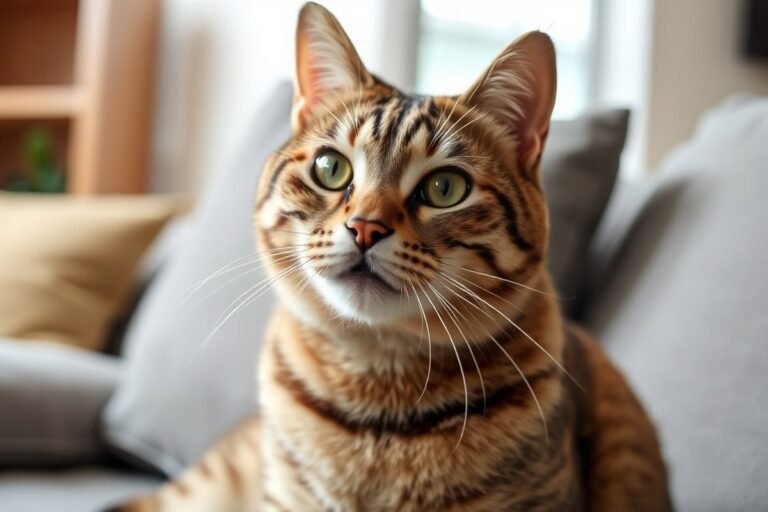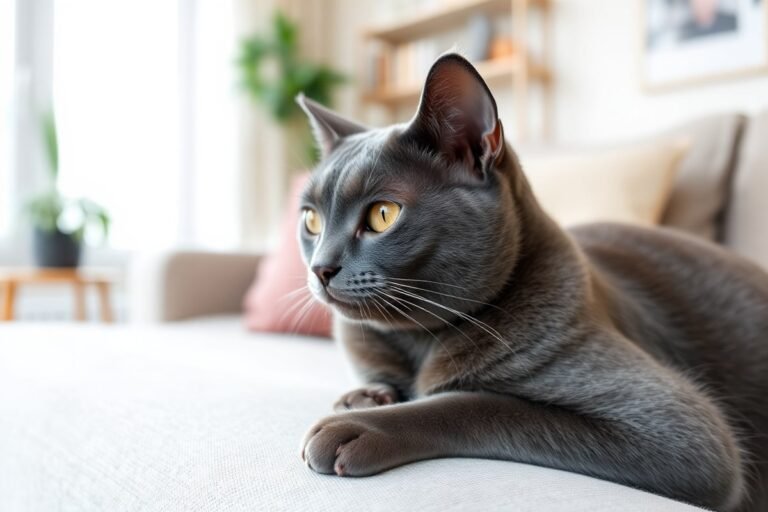
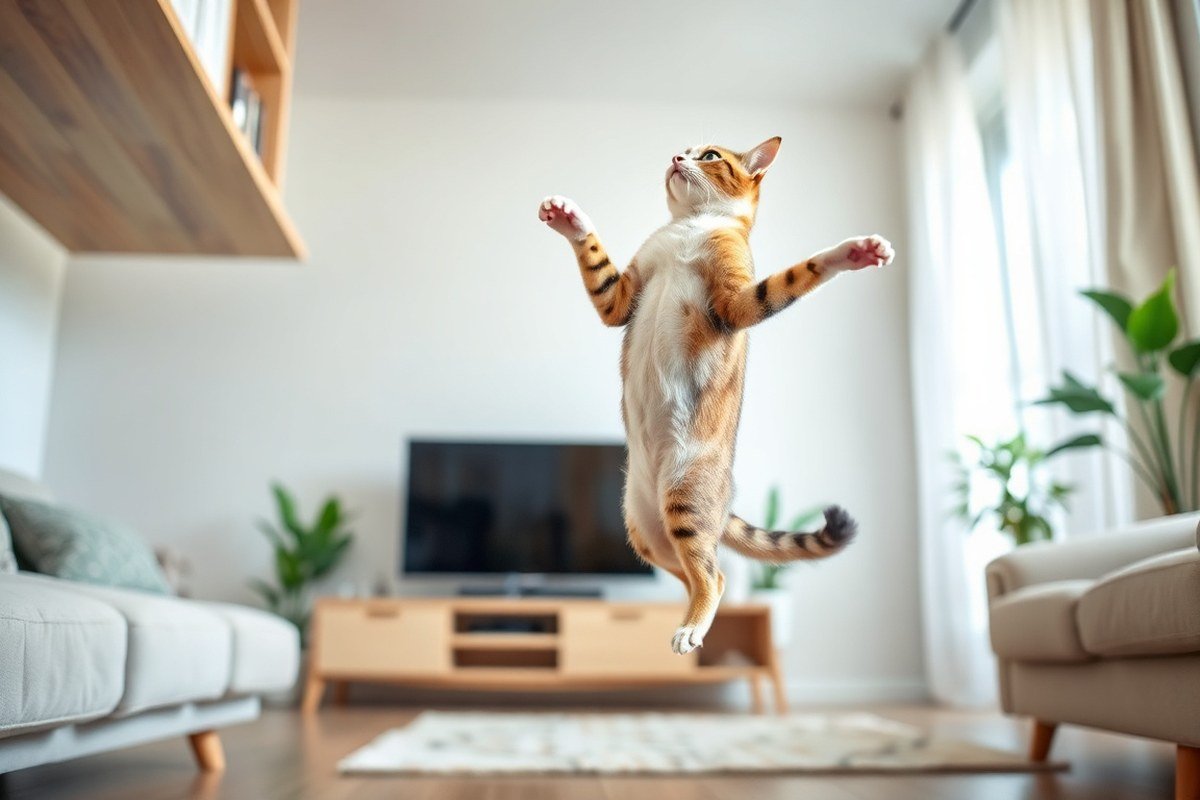
How High Can Cats Jump? A Complete Guide with Breed Comparisons & Safety Tips
How high can cats jump varies by age, breed, and health, with most domestic cats reaching 8 to 9 feet in a single leap. Cats can jump up to six times their body length due to their strong hindlimbs and flexible spine. Observing your cat’s age and physical condition helps you understand their jumping limits and keep them safe.
Key Takeaways
- Younger, healthy cats typically have better jumping ability than senior cats due to stronger muscles and fewer joint issues.
- Breed influences jump height; larger breeds like Savannahs and Maine Coons can jump around 8 feet or more.
- Smaller or short-legged breeds, such as Munchkins, generally jump lower, often under 3 feet.
- Keep senior cats comfortable by providing easy access to their favorite high spots to prevent risky jumps.
- Muscle strength and spine flexibility are key factors allowing cats to jump high vertically and horizontally.
- Regular vet checkups help spot arthritis or health problems that limit a cat’s jumping ability early.
How High Can Cats Jump and What Limits Their Height
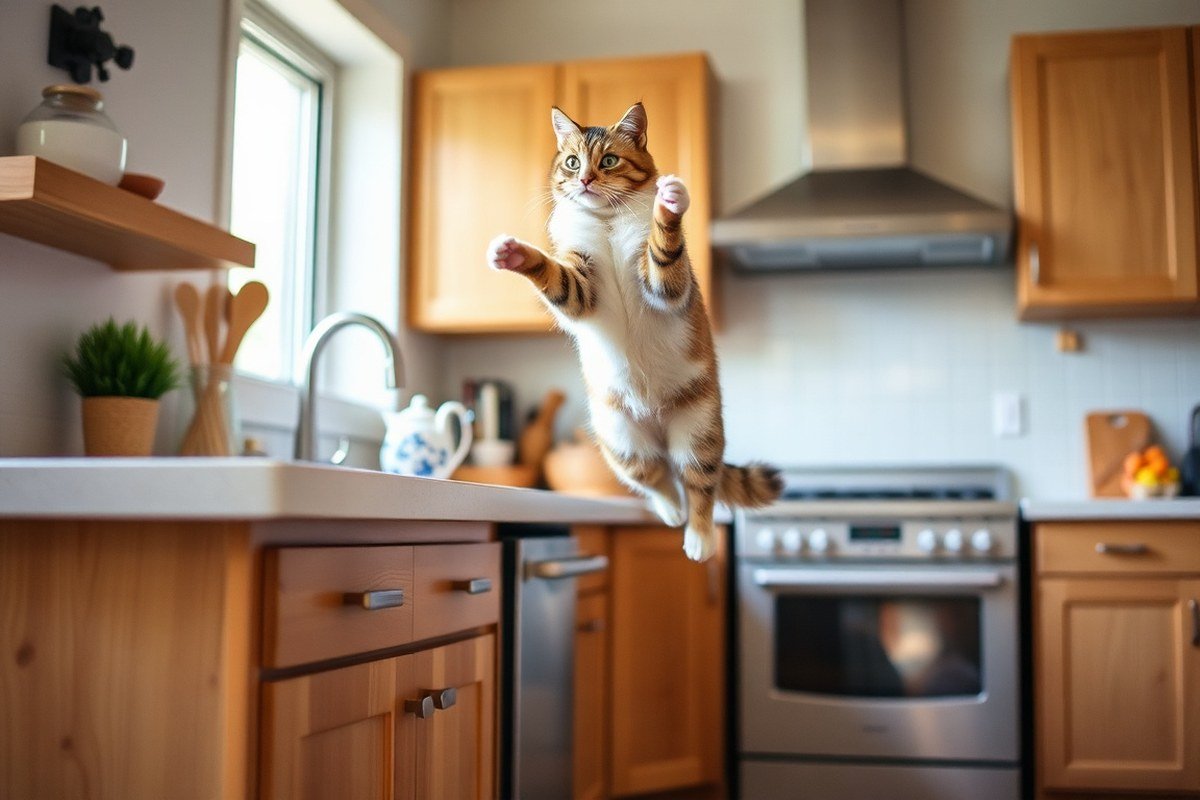
The typical domestic cat can jump roughly 5 to 6 times its own height, which translates to about 4.9 to 5.9 feet for an average cat standing 10 to 12 inches tall. This impressive ability makes a common house cat capable of leaping onto shelves, counters, or furniture quite easily. Factors like strong leg muscles, flexible spines, and precise balance all contribute to this capacity. However, each cat varies depending on age, health, and breed.
Wild cats generally far surpass domestic cats in jumping height and distance. For instance, the lynx can leap up to 25 feet, while pumas reach about 16 feet in a vertical jump. Snow leopards excel in long-distance leaps, famously covering up to 49 feet. These abilities are supported by their larger size and more powerful musculature. Domestic breeds with longer limbs may jump higher than those shorter or stockier in build, but they rarely approach their wild relatives’ extreme measurements.
Biological limits affect how high cats can jump. Muscle strength, tendon elasticity, and skeletal structure define maximum height. Size plays a dual role, larger cats have more power but a heavier body to lift, which may limit jump height relative to their size. Smaller cats can jump many times their height but won’t reach extreme absolute heights. Cats also depend on flexibility and technique; aging or health problems like arthritis reduce jump heights as well.
| Type of Cat | Typical Jump Height (feet) | Jump Height Relative to Body Size |
|---|---|---|
| Average Domestic Cat (10, 12 in tall) | 5, 6 | 5, 6 times own height |
| Large Domestic Breeds (e.g., Maine Coon) | 6, 7 | 4, 5 times own height |
| Lynx (wild cat) | Up to 25 | Variable, lower multiple due to size |
| Puma | Up to 16 | 3, 4 times own height |
| Snow Leopard | Long jump up to 49 (distance) | Varies |
What Body Mechanics and Muscles Allow Cats to Jump so High
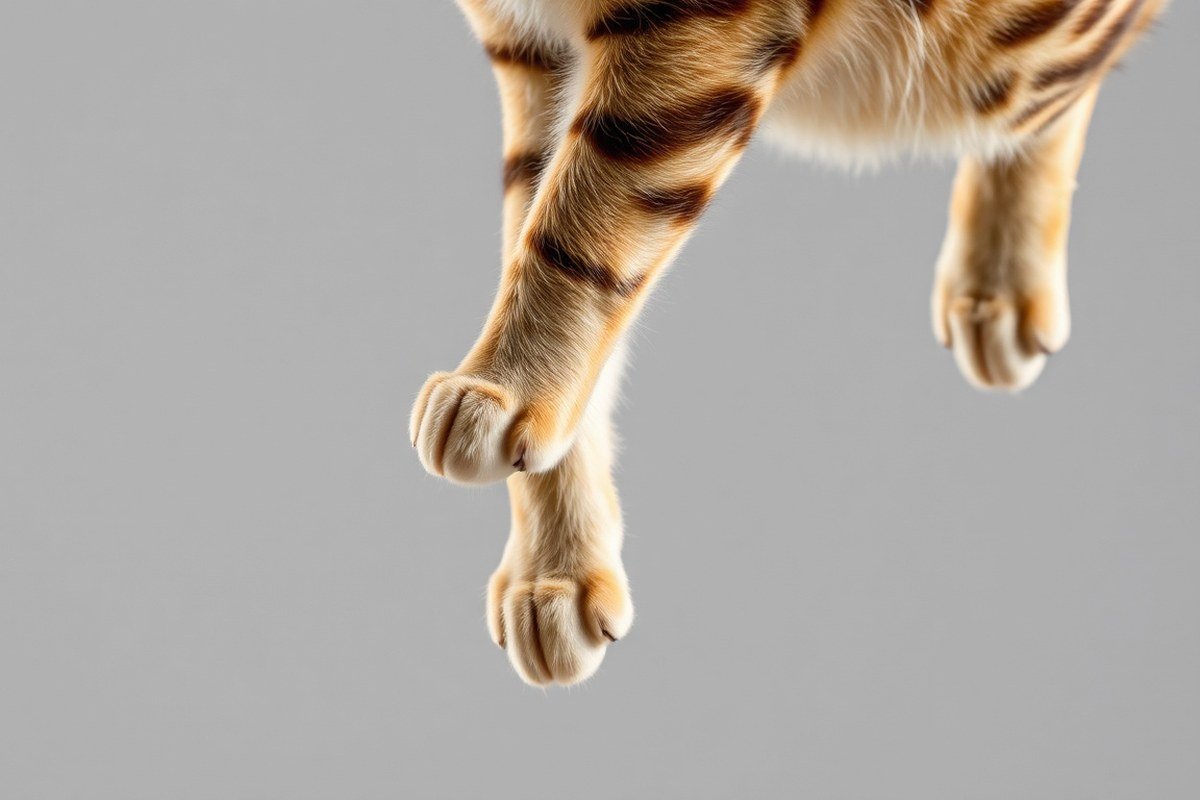
Cats rely on their powerful hindlimb muscles to generate the force needed for high jumps. These muscles contract rapidly to push off the ground, propelling the cat upward. A cat uses roughly 500 muscles during a jump, with the hindlimbs providing the majority of the explosive power.
The flexible spine plays a key role in extending the jump height and controlling body position midair. Cats can arch and stretch their spines, increasing the length of their leap and allowing them to adjust their body posture while airborne. This flexibility also improve their ability to twist and land safely on narrow or uneven surfaces.
The coordination of limbs and tail helps cats maintain balance throughout the jump. As a cat leaps, the front limbs reach forward to prepare for landing, while the tail acts as a counterbalance for steering during flight. This coordination enables precise control, so the cat lands softly and avoids injury.
These body mechanics work together through a series of steps: the cat crouches to load power into the hindlimb muscles, rapidly extends those muscles to launch, flexes and extends the spine to lengthen the leap, and adjusts limb and tail position for balance. The ability to use all these parts smooth is why cats can jump up to six times their body length.
Cats with less muscle strength, reduced flexibility, or coordination issues may not jump as high or safely. Proper muscle tone and spinal health are essential for this athletic feat. Heavy or overweight cats find it harder to generate the needed muscle force, while breeds with shorter legs jump lower. Keeping your cat active helps maintain the muscles and flexibility necessary for high, controlled jumps.
How Age, Breed, and Health Affect a Cat’s Jumping Ability
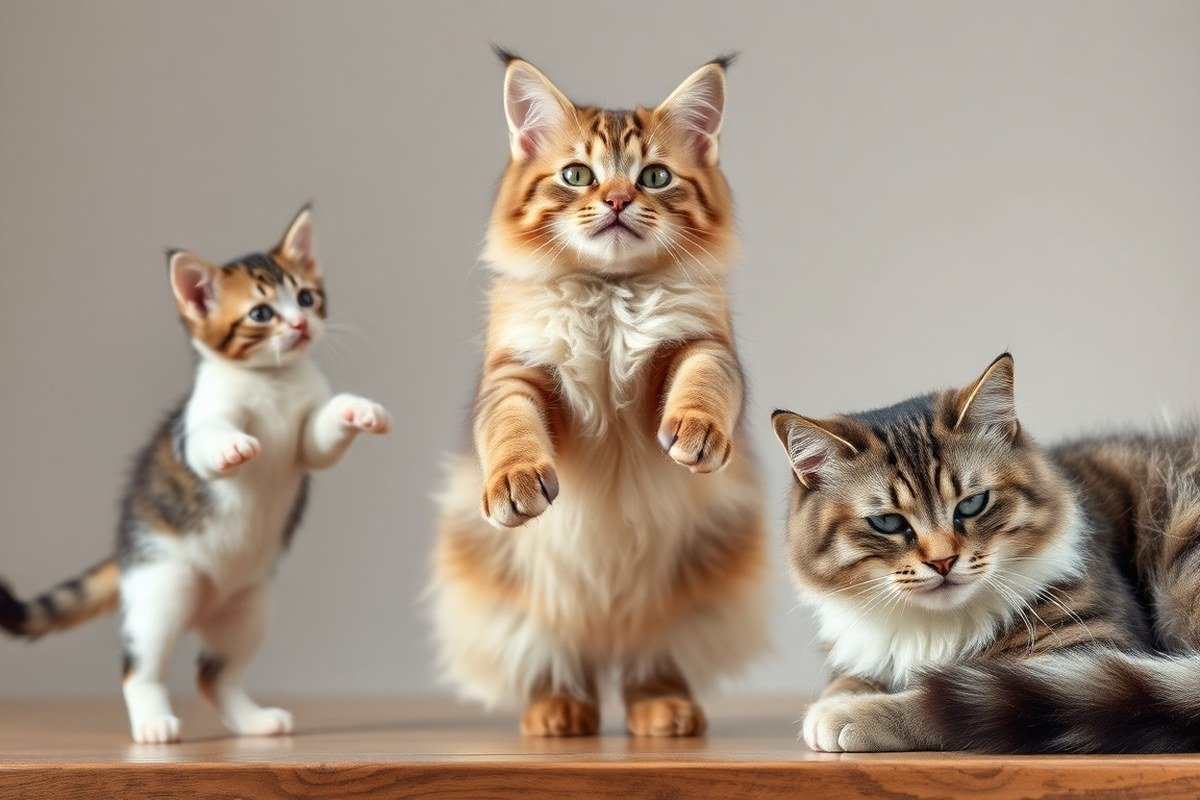
Age, breed, and health all have a clear impact on a cat’s jumping ability. Kittens cannot jump as high as adult cats because their muscles and coordination are still developing. Providing climbing and jumping opportunities during kittenhood, like cat trees or shelves, helps build strength and skill that benefit their adult jumping performance. On the other end of the spectrum, cats over 7 years old often show reduced jumping ability. This decline is linked to diminished muscle mass, arthritis, or other health issues causing joint pain or stiffness. These factors reduce both their motivation and physical capacity to jump to higher spots.
Breed differences also play a significant role. For example, athletic breeds with longer legs such as the Abyssinian typically jump higher, often reaching up to 6 or 7 feet. In contrast, breeds like the Munchkin with shorter legs tend to have limited vertical jumps, usually closer to 3 or 4 feet. Most other domestic cats fall somewhere between these ranges depending on body type, energy, and weight. Here’s a basic comparison for average jump height by breed: Abyssinian (6, 7 feet), Maine Coon (5, 6 feet), Domestic Shorthair (4, 5 feet), and Munchkin (3, 4 feet).
Weight and health conditions are also important. Overweight cats or those with neurological disorders affecting balance can struggle to jump well. Joint diseases such as arthritis or injuries in bones and muscles typically reduce power and range of motion. To check if health problems are affecting your cat’s jumping, watch for signs like reluctance to leap, stiffness after resting, limping, or difficulty climbing stairs. Consult your vet for a thorough examination if you notice these issues. Maintaining a healthy weight through proper diet and regular vet checkups supports better jumping ability and overall mobility in your cat.
Safe Jumping Practices and How to Prevent Dangerous Leaps
Jumping from high places can be risky for cats, especially if they land awkwardly or on hard surfaces. Injuries like sprains, fractures, or even worse can happen if you don’t provide safe landing zones or if your cat jumps onto unstable furniture or slippery counters. To prevent these problems, focus on making your cat’s environment secure and comfortable for their natural jumping instincts.
Encourage your cat to use safe improve areas by investing in sturdy cat trees, shelves, or window perches. These offer good vantage points and reduce the appeal of jumping onto kitchen counters or fragile items. You can also install a catio or secure screened porch with fencing at least 6 feet tall, which helps contain your cat safely while allowing vertical exploration.
- Place padded mats or rugs under favorite jumping spots to soften landings
- Use double-sided tape or aluminum foil on counters to deter jumping
- Keep hazardous items like sharp utensils and breakables out of reach
- Regularly inspect cat trees and perches for stability and repair any loose parts
- Block access to balconies or windows without secure screens
- Provide plenty of engaging toys and playtime to reduce risky jumps out of boredom
- For outdoor cats, ensure fencing is at least 6 feet tall to prevent escapes and falls
Consistently applying these tips can lower the chance of accidents and give your cat safe places to jump and climb. If your cat hesitates to jump or seems off-balance, a veterinarian check can rule out injury or health issues. Creating an environment that meets your cat’s natural needs while controlling hazards helps protect their health and happiness.
Comparing Vertical vs. Horizontal Cat Jumps and World Records
Domestic cats can jump both vertically and horizontally, but their distances differ significantly based on the type of jump. In terms of vertical jumping, a typical domestic cat weighing around 11 pounds can reach heights of up to 7 feet, which shows impressive strength and agility considering their size. Horizontal leaps tend to cover greater ground; for example, Sputnik the cat holds the Guinness World Record for the longest horizontal jump by a cat, landing a staggering 7 feet 6 inches distance in 2024.
Big cats, including species like the snow leopard and tiger, demonstrate even more remarkable vertical jumping abilities due to their larger muscle mass and body structure. Snow leopards and tigers can both jump vertically about 20 feet. Meanwhile, cougars and servals reach vertical heights of approximately 18 and 15 feet respectively. This is much higher than domestic cats, illustrating how wild cats excel in powerful vertical leaps, which they use for hunting and navigating rugged terrains. These cats generally do not jump horizontally as far as domestic cats in everyday movement, focusing instead on vertical agility.
Comparison of vertical jump heights across cat species reveals that larger wild cats usually surpass smaller species in vertical distance, although their weight also increases. For example, a lion weighing 420 pounds can jump about 12 feet vertically, whereas a much lighter black-footed cat at 4 pounds can jump 5 feet vertically. This kind of data helps explain differences in hunting and survival behaviors between species.
| Type | Domestic Cat | Snow Leopard | Tiger |
|---|---|---|---|
| Weight (lbs) | 11 | 72 | 680 |
| Vertical Jump (feet) | 7 | 20 | 20 |
| Horizontal Jump Record (feet) | 7.5 (Sputnik) | Not Recorded | Not Recorded |
Vertical and horizontal jumping are different skills that cats develop for various reasons. Vertical jumps require explosive upward power to reach high places or catch prey above them. Horizontal jumps cover distances needed to cross gaps or chase moving targets. Understanding these differences helps you better appreciate your cat’s abilities and how they use jumping naturally. While domestic cats excel at horizontal leaps within their environment, wild cats often rely on vertical power to navigate their habitats. Keeping your cat active can help maintain these natural instincts safely.
Step-by-Step Action Plan to Manage and Support Your Cat’s Jumping
Follow these clear steps to understand your cat’s jumping habits and keep them safe while encouraging their natural abilities.
- Day 1: Observe your cat’s favorite jumping spots and typical heights to understand their current limits and preferences.
- Week 1: Provide stable, varied-height jumping platforms like cat trees or shelves to encourage safe jumps; your cat should show interest and use these areas regularly.
- Week 2: Inspect your home for potential hazards near jumping areas, such as sharp edges or unstable furniture; remove or cushion them and note a decrease in risky attempts.
- Week 3: Monitor your cat’s jumping activity for signs of difficulty or reluctance, possibly related to health or age, then plan a veterinary checkup if needed.
- After 1 Month: Introduce interactive play that promotes horizontal jumps and muscle strength, such as toys that encourage chasing and pouncing; your cat should appear more agile and engaged.
- Ongoing: Keep adjusting the setup to match your cat’s age and breed needs, maintaining their safety and enjoyment; observe improvements or setbacks in their jumping behavior.
Frequently Asked Questions
How Does a Cat’s Environment Affect Its Jumping Height?
A cat’s environment influences its jumping by providing safe landing spots and varied surfaces, which encourage practice and confidence. Cats in enriched, obstacle-filled spaces often jump higher due to motivation and physical conditioning.
Can Indoor Cats Jump as High as Outdoor Cats?
Indoor cats generally jump just as high as outdoor cats but may lack as many opportunities to build jumping strength without stimulation. Regular play and climbing structures help indoor cats maintain jumping ability.
Do Cats Adjust Their Jumping Height Based on the Landing Surface?
Yes, cats instinctively estimate and adjust their jump to suit the landing surface to avoid injury. They prefer landing on stable surfaces and may shorten their jump if uncertain about stability.
What Role Does a Cat’s Tail Play in Jumping?
A cat uses its tail for balance during jumps and mid-air adjustments. It acts as a counterbalance to help land safely and maintain control over direction.
Can Poor Nutrition Affect How High a Cat Can Jump?
Poor nutrition can reduce muscle strength and energy, limiting a cat’s jumping height. A balanced diet supports muscle health and stamina, which are key for powerful jumps.
The Bottom Line
Adult cats often jump between four to six feet, propelled by strong muscles and flexible joints. To help your cat maintain this ability, keep them active with safe play areas and watch for any changes in their confidence or health. Try setting up a new cat tree or shelf this week and see how your cat adapts to different heights and distances.