Can Cats Eat Celery? Safe Feeding Tips, Benefits & Risks Explained
Can cats eat celery? Yes, cats can safely eat celery as an occasional treat. Celery is mostly water, which helps support hydration without adding many calories. Start by giving a small, plain piece and watch your cat for any adverse reaction within 24 hours.
Key Takeaways
- Limit celery treats to 5% or less of your cat’s total daily diet to maintain nutritional balance.
- Cut celery into small, manageable pieces to reduce the risk of choking.
- Celery’s high water content can help hydrate cats who don’t drink enough water.
- Monitor your cat after feeding celery for any signs of digestive upset or allergic reaction.
- Avoid celery leaves if your cat shows skin sensitivity, due to compounds like psoralen.
- Rotate treats regularly to avoid dietary imbalance and maintain interest.
Can Cats Safely Eat Celery and Its Leaves?
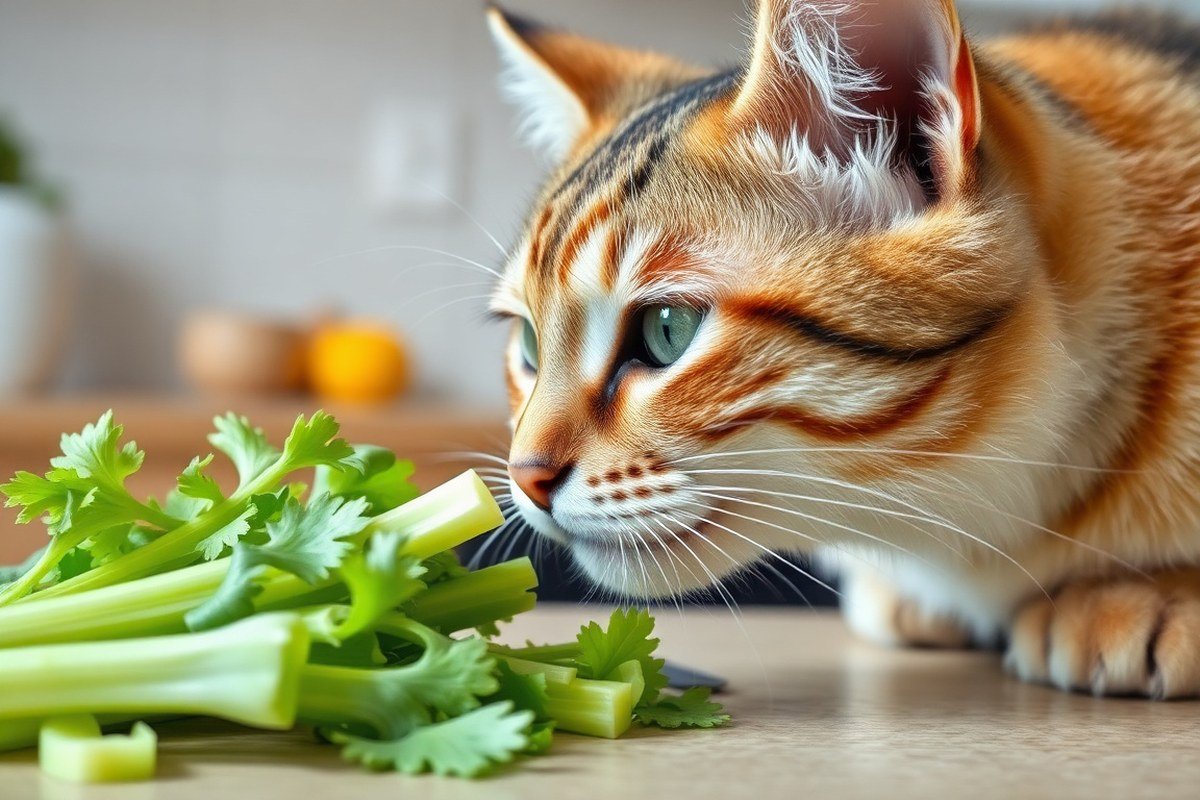
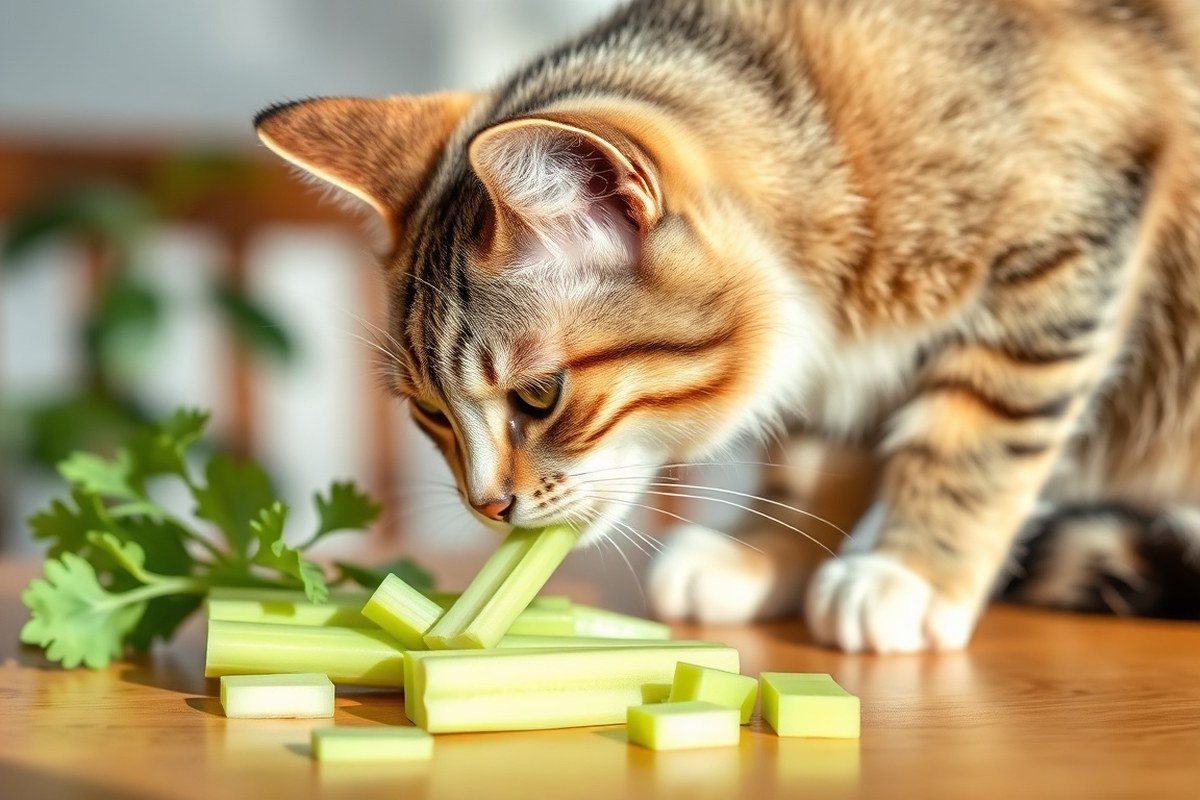
Cats can safely eat celery stalks and leaves when offered in small, prepared portions. Celery stalks, stripped of their tough strings and cut into small pieces about half an inch long, provide a crunchy snack that is low in calories and mostly water. The strings in celery can pose a choking hazard or cause digestive discomfort, so removing them is important. Celery leaves are generally safe as well and often preferred by older cats because they are easier to chew when finely chopped.
Feeding celery to your cat is a reasonable choice as long as you avoid cooked or seasoned versions that include ingredients toxic to cats, such as onions or garlic. Raw, plain celery stalks and leaves contain no harmful chemicals for cats and can even encourage hydration, thanks to their high water content. However, celery juice is best limited to about a tablespoon per day since it is concentrated, and celery seeds should not be given without professional veterinary advice due to their strong medicinal compounds.
The decision rule for feeding celery to your cat is simple: offer only small amounts of washed, string-removed, raw celery stalks or finely chopped leaves as an occasional treat. Watch for any signs of choking or digestive upset within a few hours after eating. If your cat enjoys the flavor and tolerates it well, celery can be a safe and hydrating snack. Avoid giving large quantities, cooked celery, or parts like seeds and juice without vet guidance, as these can cause issues. This approach keeps risks low and lets you see whether celery fits into your cat’s diet comfortably.
Nutritional Benefits and Hydration Support from Celery for Cats
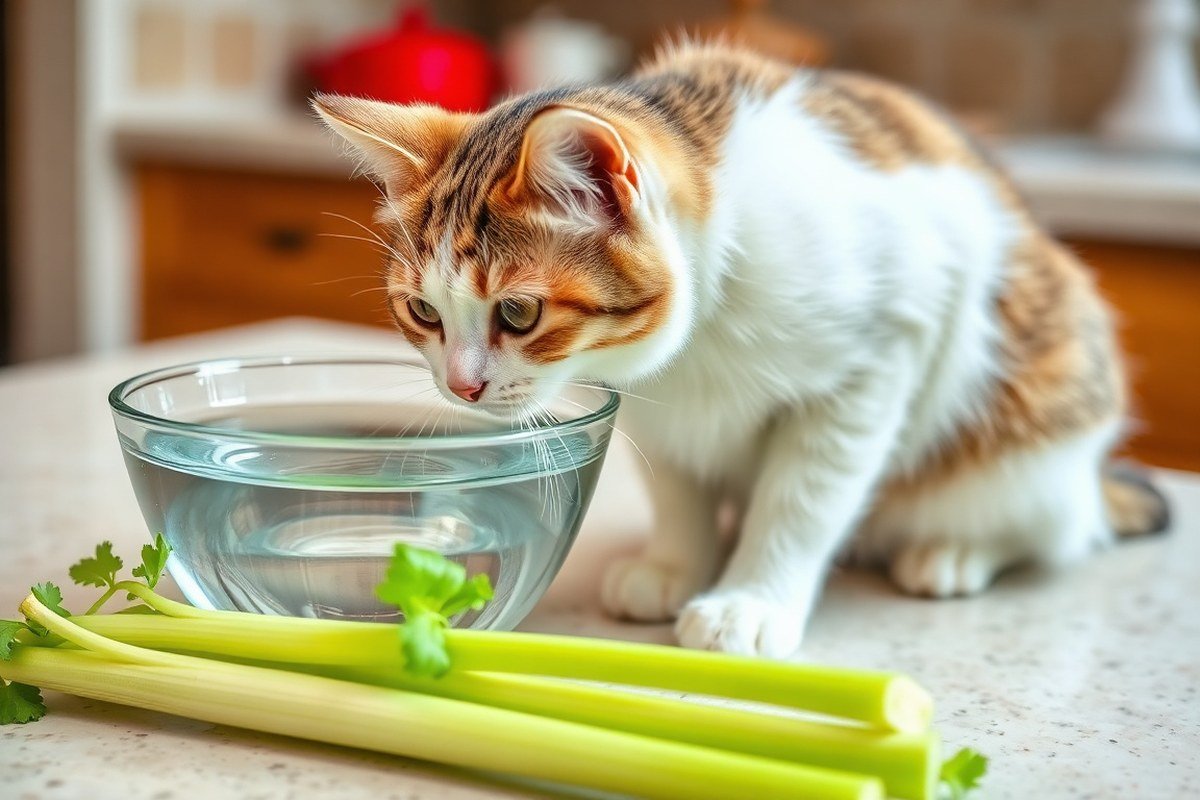
Celery provides several nutritional benefits for cats due to its unique composition. It is made up of about 95% water, which helps with hydration. Cats that do not drink enough water might benefit from occasional celery snacks, as the moisture content can contribute to their overall fluid intake. Compared to lettuce, another high-moisture vegetable, celery offers similar hydration support but also includes other nutritional elements.
The fiber in celery supports digestive health by helping maintain regular bowel movements and preventing occasional constipation. Cats require a balanced diet that primarily consists of protein, so too much fiber might be difficult for some cats to digest. Introducing small amounts gradually allows you to see how your cat responds without upsetting their digestive system.
Celery offers about 15 types of antioxidants, like apigenin and luteolin. These substances help lower inflammation and shield cells from damage caused by oxidation. Cats dealing with inflammation-related issues, such as mild arthritis, may gain some small benefits from celery’s antioxidants. Still, these advantages should not replace professional vet care and should only supplement a nutritious diet.
Celery also provides small amounts of vitamins and minerals that contribute to overall health. The low-calorie nature of celery makes it a healthy treat option that doesn’t add unnecessary calories. Keep portions small and occasional to prevent digestive upset since cats are obligate carnivores and do not rely on vegetables for nutrition.
Risks of Feeding Celery to Cats: Choking, Psoralen, and Digestive Issues
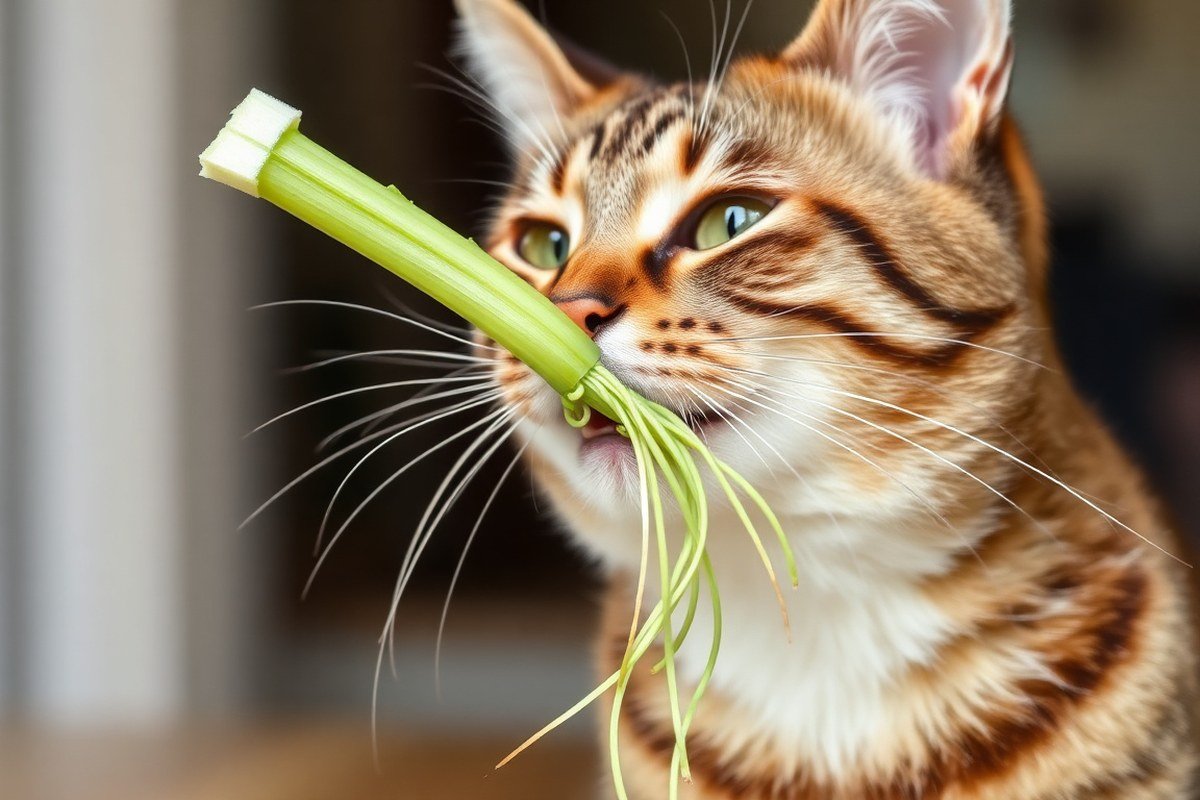
Feeding celery to your cat carries some risks, mainly due to its stringy texture and chemical content. Celery stalks can be tough and fibrous, which means large pieces might get stuck in your cat’s throat or digestive tract, creating a choking hazard or causing vomiting and diarrhea. To avoid this, always cut celery into very small, manageable pieces before offering it to your cat.
The presence of Psoralen compounds in celery also demands caution. Psoralen may increase skin sensitivity to sunlight in some animals after skin contact, and while effects from eating celery are less common, cats with sensitive stomachs, dental problems, or kidney and urinary issues could have adverse reactions. It’s best to consult your veterinarian if your cat falls into these categories before feeding any celery.
Digestive upset is the most common side effect when cats eat too much celery or consume its leaves. Too many celery leaves can cause vomiting, diarrhea, or gas, so limit how much you give and observe your cat afterward. If you notice excessive lip licking, bloating, or sudden loss of appetite within 24 hours, stop feeding celery and seek veterinary advice.
Checking your cat closely after offering celery is key. Cut celery finely and start with a very small amount to see how your cat reacts. Avoid feeding celery to cats on prescription diets or with known digestive or liver problems without veterinary guidance. This can minimize any risk of digestive distress or allergic reactions, which could include itching, swelling, or gastrointestinal upset. Proper preparation and moderation help keep celery safe for your cat to enjoy occasionally.
How to Prepare and Feed Celery to Your Cat Safely
Start by thoroughly washing celery to remove any dirt or pesticides that could harm your cat. Remove the tough outer strings, as they can be difficult for your cat to chew or digest. Next, chop the celery into very small pieces, no larger than the size of your cat’s kibble. Using a food processor to mince the celery helps create uniformly small bits that reduce choking risk.
Offer only a small amount at a time, around 1 teaspoon for a small cat or up to a tablespoon for a larger cat. This portion size fits within the 10% treat guideline most vets recommend, ensuring celery does not replace balanced cat food in your pet’s diet. Frequency should be limited to a few times per week. Monitor your cat’s reaction, especially if they are young, elderly, or have pre-existing health conditions, and adjust accordingly.
Avoid feeding cooked or seasoned celery. Cooking with onion, garlic, salt, or butter introduces ingredients that can harm your cat. Always serve celery raw and plain. Celery juice can be given, but limit it to no more than a tablespoon daily. Since celery juice acts as a natural diuretic, too much may lead to dehydration, so watch for increased thirst or urination.
In summary, prepare celery by washing, de-stringing, and finely chopping. Feed small amounts raw, keep treats under 10% of daily calories, avoid seasoning or cooking, and limit celery juice to a tablespoon daily. This approach minimizes risks like choking or digestion problems and lets you safely share this crunchy vegetable with your cat.
What to Do If Your Cat Has Problems After Eating Celery
Observe your cat closely after feeding celery, especially within the first 24 hours. Look for any signs of adverse reactions such as vomiting, diarrhea, or unusual lethargy. Vomiting may happen if your cat’s stomach doesn’t tolerate celery well, while diarrhea can indicate digestive upset from too much fiber or the natural compounds in celery leaves. These symptoms signal that celery might not agree with your cat’s digestive system.
If your cat vomits once but quickly recovers and acts normal, you can withhold celery and monitor for any further issues. For minor diarrhea, ensure fresh water is always available to prevent dehydration. Avoid giving more celery until symptoms resolve and try only a small amount next time, if your vet approves. Feeding celery remains a supplement, so cutting it out often poses no risk to your cat’s health.
Contact your veterinarian if vomiting or diarrhea persists for more than 24 hours, worsens, or if your cat shows signs of weakness, refusal to eat, or dehydration. These could indicate a more serious reaction requiring professional care. Your vet might suggest supportive treatment or recommend tests to rule out allergies or other causes. Always follow your vet’s instructions on when to reintroduce celery, if at all.
Other Safe and Unsafe Vegetables to Feed Your Cat
You can feed your cat certain vegetables safely, but some common veggies are off-limits. Celery, for example, is safe when offered in moderation after removing the tough strings and leaves, but it is not a staple in commercial cat foods. Other vegetables like cooked carrots, zucchini, or peas can be safe treats if prepared properly by removing seeds and stems. On the other hand, onions, garlic, and leeks are toxic and must never be fed to cats.
Seniors or cats with sensitive digestive systems require extra caution. Their digestion may not tolerate fibrous vegetables like celery or raw veggies well, so offering smaller portions or avoiding crunchy vegetables altogether can prevent stomach upset. Hydration needs also matter. Celery has high water content, similar to cucumber, making it a hydrating snack. However, some cats might prefer soft fruits like watermelon (seedless and in small amounts) for hydration, while others tolerate watery vegetables better.
| Vegetable | Safe for Cats? | Preparation Notes | Hydration Support | Special Considerations |
|---|---|---|---|---|
| Celery | Yes, in moderation | Remove strings, leaves; chop or offer as chunk | High water content | May cause choking if too large; avoid excess fiber for sensitive cats |
| Carrots (cooked) | Yes | Softened by cooking; remove tops | Moderate | Hard raw carrots might be tough for older cats |
| Peas (cooked) | Yes | Cooked without salt | Moderate | Fine in small amounts |
| Onions, garlic, leeks | No | Never feed | N/A | Toxic, can cause anemia |
| Cucumber | Yes | Peel and slice | Very high | Great for hydration; mild taste |
Introducing vegetables gradually and in tiny amounts helps you observe how your cat handles the new food. Avoid letting them replace a balanced diet; treats should always be less than 10% of daily intake to prevent nutritional imbalance. Consult your veterinarian if your cat has special health concerns before offering vegetables regularly.
Step-by-Step Action Plan for Feeding Celery to Your Cat
Follow this plan to introduce celery safely into your cat’s diet while watching for any adverse reactions.
- Before you start: Consult your vet to confirm celery is appropriate for your cat’s health and diet.
- Day 1: Offer a tiny piece of plain, washed celery to your cat. Check for interest and no immediate signs of distress.
- Day 2 to 3: Observe your cat’s stool and behavior for mild digestive changes or discomfort.
- Week 1: If no problems appear, increase serving size slightly but keep pieces small to avoid choking.
- Week 2: Continue monitoring hydration and appetite to ensure celery is not causing any issues.
- After 2 weeks: Confirm celery is accepted without problems and can be given occasionally as a treat.
- Ongoing: Avoid celery leaves and any seasoning or additives. Store celery safely out of reach when not feeding.
Frequently Asked Questions
Can Cats Eat Celery Every Day?
Cats can eat celery occasionally but not every day to avoid digestive upset. Feeding small amounts a few times a week is safer.
Is Celery Juice Good for Cats?
Celery juice can be given in small amounts, about one tablespoon daily, as it is concentrated. Avoid giving large quantities to prevent stomach issues.
Can Celery Seeds Harm My Cat?
Celery seeds should only be given under a vet’s supervision because of their medicinal properties. They are not safe as casual treats.
Can Cooked Celery Be Fed to Cats?
Cooked celery is unsafe if it contains seasoning like onion, garlic, salt, or butter. Always avoid cooked or seasoned celery.
Are Celery Leaves Safe for Senior Cats?
Yes, celery leaves are often easier for senior cats to eat when finely chopped and provide hydration and nutrients.
Key Points to Remember
Celery can be a safe, hydrating treat for your cat if prepared and given properly, with attention to portion and monitoring for risks. Try offering small, plain pieces occasionally to support variety in your cat’s diet. Watch your cat closely for any reactions and keep in touch with your vet about their overall nutrition and health.